



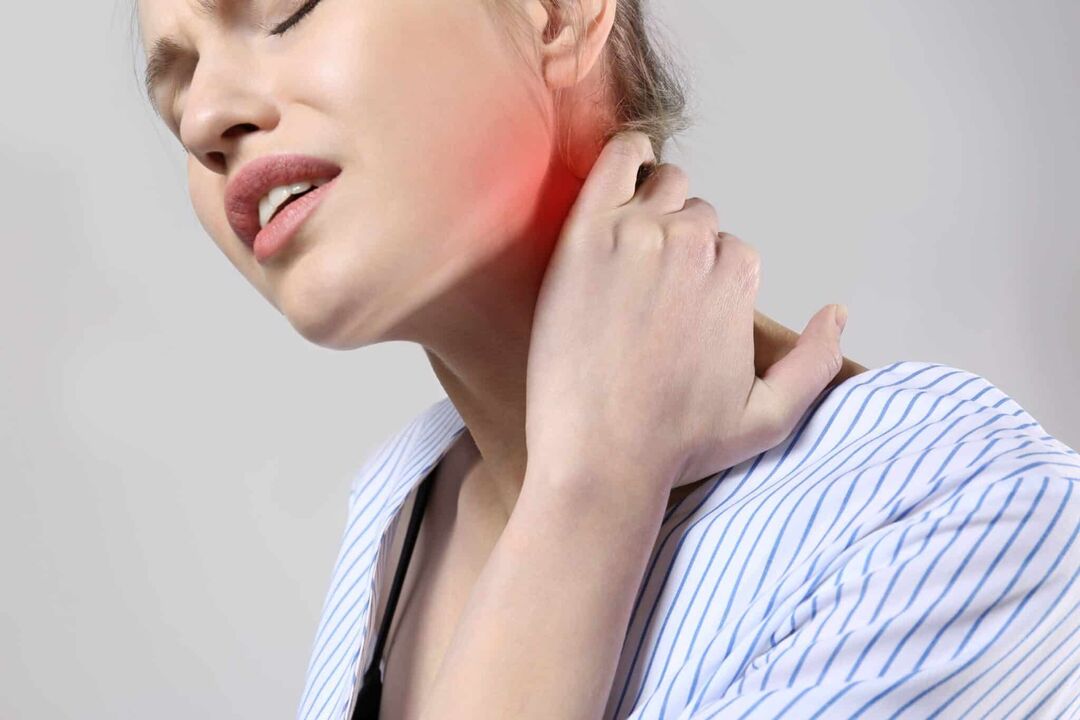
The neck is made up of vertebrae that extend from the skull to the upper torso.Cervical discs absorb shock between the bones.Bones, ligaments and muscles support the head and allow it to move.If there are any irregularities, abnormalities, inflammation or injuries, this can cause pain or stiffness in the collar area.At such moments, it is difficult to immediately determine why the neck hurts and take any measures.
Many people sometimes experience discomfort or stiffness in this area, most often caused by poor posture or overuse.In most cases, neck pain is not a serious pathology and can be eliminated within a few days.However, in some cases, such a symptom may indicate a serious illness and requires consultation with a doctor.
This article will help you understand why your neck hurts on the right side, as well as in other places.A classification of types of pain and its most common causes will also be given.Let's consider how you can get rid of discomfort in this part of the spine.
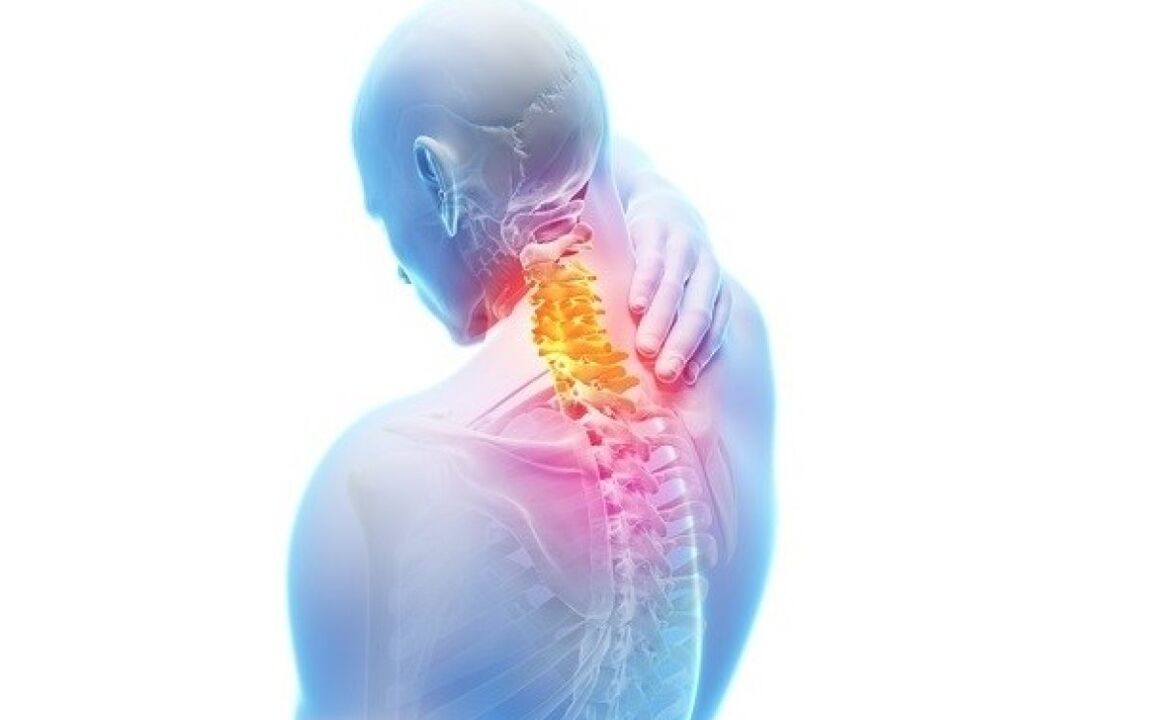
Types of pain in the cervical region
In order to prescribe effective treatment, a specialist must accurately determine the symptoms and causes of the pathology.Doctors classify neck pain as follows:
- cervicago - lumbago;
- cervicalgia.
The latter type involves pain arising from damage to the vertebrae or neck muscles.Cervicalgia, in turn, can be divided into pain:
- associated with skin lesions (superficial somatic);
- associated with muscle or spinal damage (deep somatic);
- associated with the appearance of infection in the body or disruption of internal organs (visceral).
Cervicalgia, affecting nearby areas, is divided into:
- for cervicobrachialgia (pain goes from the neck to the shoulders);
- for cervicocranialgia (pain goes from the neck (through the back of the head) to the head).
Speaking about cervicago, it is worth noting that this pain is always acute and limits the mobility of the neck.It appears suddenly and torments a person for a certain time so that it is impossible for him to think about anything else.
In order to determine why the neck hurts, it is extremely important for the doctor to establish its nature and describe it using the listed classification.

Common Causes
Based on medical statistics, most often people who consult a doctor for medical help for neck pain are diagnosed with a number of the following diseases and conditions:
- cervical osteochondrosis;
- osteoporosis;
- muscle spasm;
- intervertebral disc herniation;
- inflammation of the lymph nodes;
- systemic disorders in the body (infectious processes, tumors, problems with the immune system).
However, pain can be caused not only by the presence of a disease in a person.Discomfort can also be caused by muscle tension or sprain (due to sitting at a computer for a long time, while driving a car, lifting heavy objects, uncomfortable posture while sleeping or playing sports).In addition, unpleasant sensations can also appear due to the fact that a person has a headache closer to the neck.
Why does this happen and what is the root cause?Only a specialist can answer this question.Sometimes people, trying to get rid of unpleasant sensations, take up self-medication - massage, taking antibiotics, painkillers and other medications.However, the consequences of such actions may not be the most favorable.
You should understand what the diseases and conditions listed above are and how they can be dangerous, and also why you cannot treat them yourself.
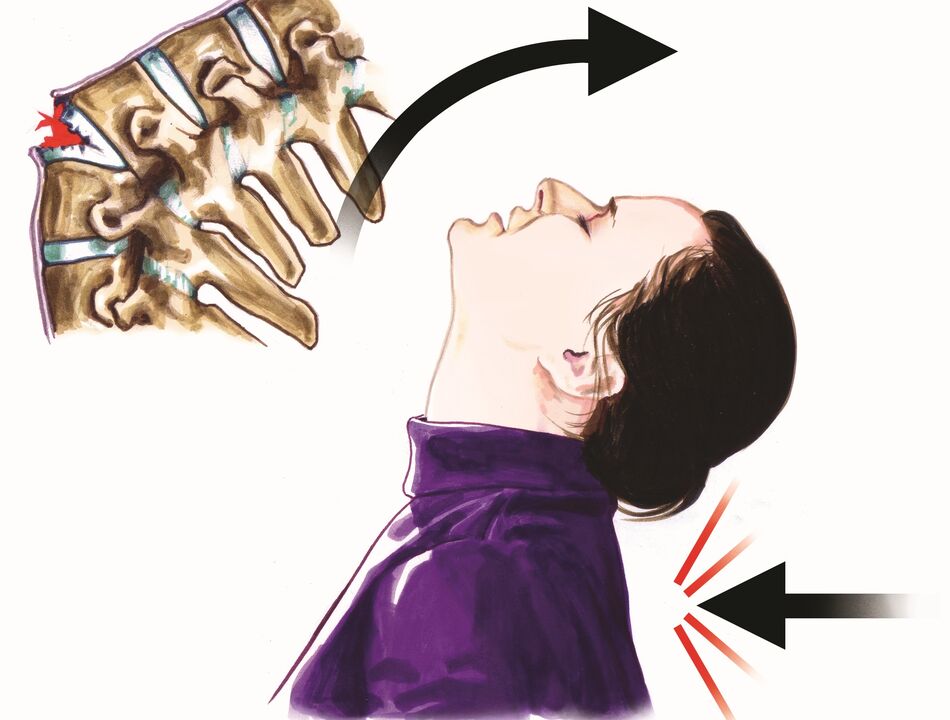
Cervical osteochondrosis
The appearance of this pathology in humans is associated with anatomical specifics.The size of the cervical vertebrae is significantly smaller than the bone structures of other segments of the spine.The neck is constantly under tension, and this is due to the fact that its main functions are to support the head and ensure its mobility.If a person wonders why the back of his neck hurts, then he needs to be consulted to see if he has osteochondrosis of this part of the spine.
Symptoms of this disease may be as follows:
- Pain from the neck to the shoulder, spreading along the outer surface of the shoulder, forearm and hands.
- Penetrating pain in the neck or occipital region (especially worse in the morning, when moving the head, coughing, etc.).
- Headache (paroxysmal or constant, dull, impulsive, worse when turning the head), dizziness, blurred vision, ringing in the ears.
- Pain in the pectoral muscle area.
- There is a disturbance in the blood flow of the cerebral arteries, which sometimes leads to temporary loss of consciousness.If your health worsens, speech and motor functions may be impaired.
You should not treat this disease yourself, as the consequences of such actions can be far from joyful.But by turning to professionals, a person can be sure that the therapy will be of high quality and effective.
As a rule, treatment of cervical osteochondrosis may include the use of various anti-inflammatory and painkillers, gels and restorative ointments, physiotherapy and health exercises.Various medicinal patches and so on can be used.
Osteoporosis
This is a bone disease that occurs when bones lose their density.As a result, they become weak and may break if dropped or subjected to minor impacts.It is the most common disease among women during menopause, but habits such as smoking, frequent drinking, as well as poor diet and sedentary lifestyle increase the risk of its occurrence.
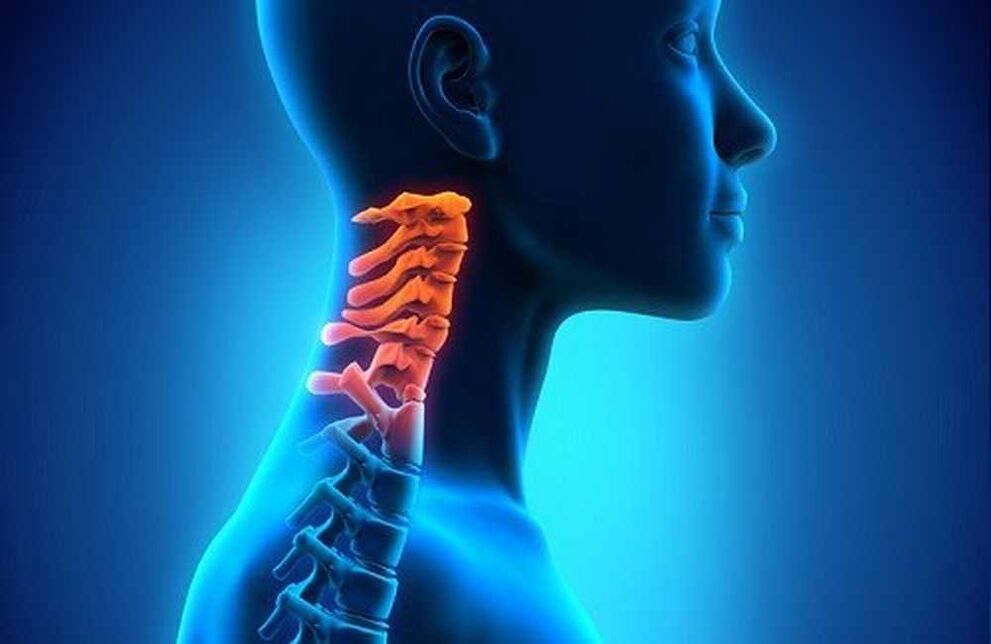
For many people, making such a diagnosis can be the answer to the question of why the back of the neck hurts and at the same time radiates to the arms and shoulders.
Doctors distinguish three stages of this disease.The first stage assumes that a person begins to experience changes in the cervical spine, such as a decrease in the density of the vertebrae, mild cramps, weakness and pain.In the second stage, constant headaches appear, blood pressure can drop sharply and rise above normal, numbness in the hands and general weakness appear.The third stage (the most difficult) assumes that a person experiences severe deformations in the vertebrae, a hump may appear in the collar area, and headaches and neck pains become constant companions.
Treatment of osteoporosis is aimed at slowing or preventing its development, maintaining bone mineral density, and reducing pain.This is achieved through the use of supplements and medications, as well as a person’s revision of their lifestyle in favor of light but constant exercise (walking, playing sports), and proper nutrition.
Muscle spasm
Why does my neck hurt on the left side?The cause may be a spasm.It occurs not only on the left, but can affect the right and back of the neck.This occurs due to involuntary muscle contraction as a result of extreme tension.The situation often causes severe pain that lasts from minutes to several days.
When wondering why the neck muscles hurt, a person should think about how he sleeps, works, and sits.Often spasms occur due to a violation of the natural position of the body, carrying heavy objects on the shoulders, including bags, stooping and other conditions (including serious diseases).
Painkillers in this case can help reduce neck pain, relieve muscle tension, and reduce inflammation.However, they must be taken following the accompanying instructions and with the knowledge of a doctor.If you are not sure that neck pain is caused by a spasm, you should not take any medications until you consult a specialist.In this case, you can apply an ice pack (wrapped in a towel) to your neck to temporarily relieve pain.
It is always worth remembering that it is very difficult to independently determine why your neck hurts.If the discomfort does not go away or intensifies, then this can be a very serious reason to visit your doctor.
Intervertebral disc herniation
This element is a strong ligament that connects one vertebral bone to another.The discs are shock-absorbing cushions between each vertebra of the column.A hernia in the cervical spine can occur when too much pressure is applied even to a healthy disc (carrying heavy objects, falling from a height).
Symptoms of this disease usually include severe pain that may spread to one or both arms or legs, as well as numbness or tingling in the extremities, muscle weakness and loss of sensation.Initially, a person may not understand why his neck hurts when turning, bending, or other habitual movements.However, over time, the discomfort becomes unbearable.Some people may not have neck or back pain from a herniated disc.Where the symptoms will manifest themselves depends on where exactly the pathology is located.
Treatment for a herniated disc depends on the severity of the disease and visible damage.Most often, people's condition improves within six weeks after their initial visit to the doctor.In many cases, medication and good physical therapy are sufficient.Therapy may use medications to control pain and reduce muscle spasms.
Inflammation of the lymph nodes
Typically, such pathologies occur as a result of exposure to bacteria or viruses.When these changes occur in the body, it becomes not difficult to understand why the neck hurts on the left or right, since it is in these areas that the lymph nodes are located.They may swell in response to an upper respiratory infection, such as a cold.Associated symptoms that may be present along with swelling are cough, fatigue, chills, runny nose, profuse sweating.
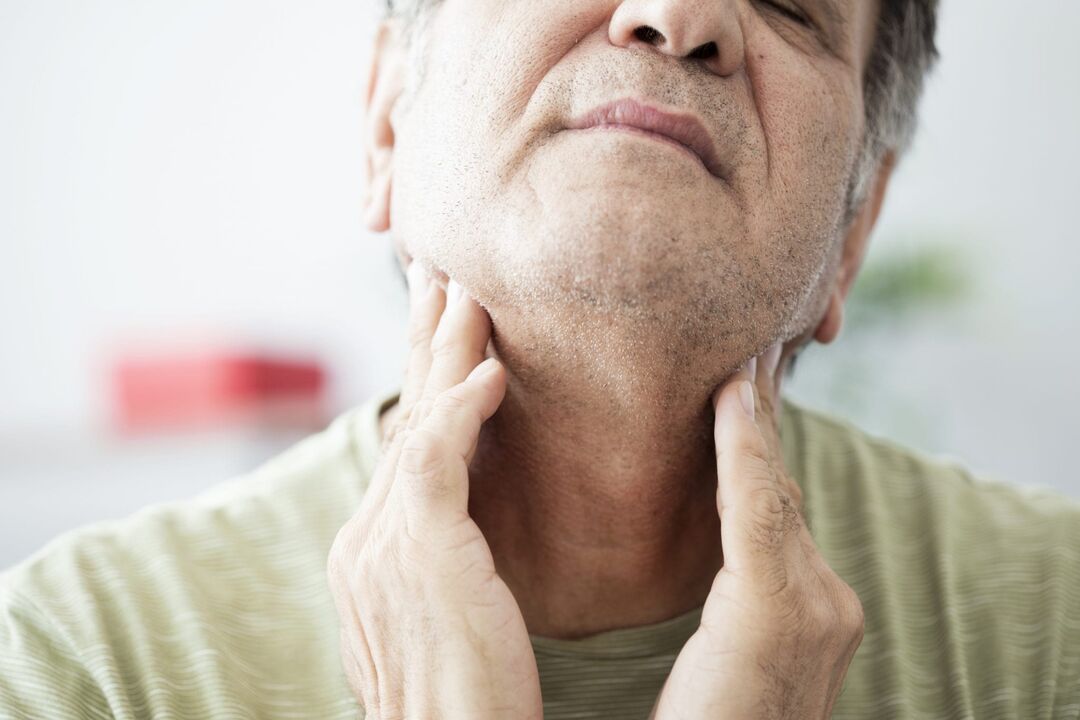
What causes neck pain when the lymph nodes are inflamed?The answer is simple: the pathological process affects the nerve endings, which send pain signals.
Treatment of such a condition usually involves identifying its nature (virus, infection, bacteria, tumor).Then the doctor prescribes medications to treat the underlying cause, which also has a beneficial effect on relieving the inflammatory process.
Various systemic disorders in the body
Sometimes people may not understand why their neck and head hurt, and why these sensations spread to their back or arms.Often this condition can be caused by some systemic disorders in the body.These include various tumors, depression, arthritis, infectious processes, meningitis, internal hemorrhages and other serious pathologies.
Pain in the cervical region can also occur when the body does not receive certain beneficial substances (vitamins, micro- and macroelements) in the required quantities.
Why your neck hurts in the front, back, or you feel muscle discomfort and headaches, only a doctor can answer based on the results of tests and additional studies.The root cause may be explained by the poor condition of other organs, not just the collar area.
Diagnostics
The first thing you need to do in order to establish the cause that causes pain in the neck is to visit a therapist.He will schedule the necessary consultation with other specialists and determine the need for technological diagnostic methods.
The specialist will explain why your neck hurts on the right side, on the left, or in another part of it.He will collect a complete medical history and determine what disturbances in the body’s functioning are currently occurring.
During the examination, a person may be prescribed the following diagnostic methods:
- MRI;
- CT;
- ECG;
- Ultrasound.
MRI can help determine the condition of tissues, CT can help identify pathologies in the cervical vertebrae, ultrasound is necessary to study the arterial ring, vessels and nearby tissues, and ECG can help the doctor rule out various cardiac pathologies.
In addition, one of the mandatory tests is to study the patient’s blood, which will help determine whether there are inflammatory or infectious processes in the body.
What to do?
Every person experiencing pain wants to get rid of it as soon as possible.The following actions may help with neck discomfort:
- You should apply ice to the sore area (initially wrap it in a towel).
- If mild pain is caused by overexertion, you should temporarily stop strenuous exercise and give your neck muscles time to rest.
- It is necessary to perform light physical exercises for the neck during the day (slow bends and turns).
- You should control your posture so as not to aggravate the situation with additional stress on the muscles and vertebrae.

If the pain does not go away within one or two days, you should seek help from a doctor who will determine why your neck hurts.If this is accompanied by symptoms such as enlarged lymph nodes, high temperature, numbness or tingling, swelling, nausea, or inability to move the head or limbs, then you should immediately call an ambulance or go see a specialist yourself.
Prevention
In order not to wonder why your neck hurts closer to your head, in other places, or why muscle spasms occur, it is important to monitor your health and follow a number of the following recommendations:
- You need to sleep only on comfortable pillows that allow the cervical region to relax while resting.To avoid neck and back problems, it is best to purchase an orthopedic pillow.
- The best position for comfortable rest of the entire spine is lying on your back.You should train yourself to fall asleep in this position.
- You need to choose the correct chair height and monitor position when working at the computer.
- You should not text, play games or read on mobile devices for a long time.This creates excessive stress on the neck (most often during such an activity the head is lowered down, which causes disturbances in the functioning of this part of the spine).
- It is important to pay attention and find time for exercise, walks in the fresh air and sports.
- You should adjust your diet and diet.It is very important that the body receives the required amount of nutrients throughout the day.
- It is best to give up bad habits (overeating, smoking, drinking alcohol and drugs).
Conclusion
Having considered the main causes of neck pain, we can conclude that it is unlikely that it will be possible to identify and eliminate the problem on your own.Therefore, it is important not to hesitate.You should immediately contact a specialist, even if the neck pain can be tolerated.It is worth remembering that even minor discomfort may indicate disturbances in the functioning of the body.